
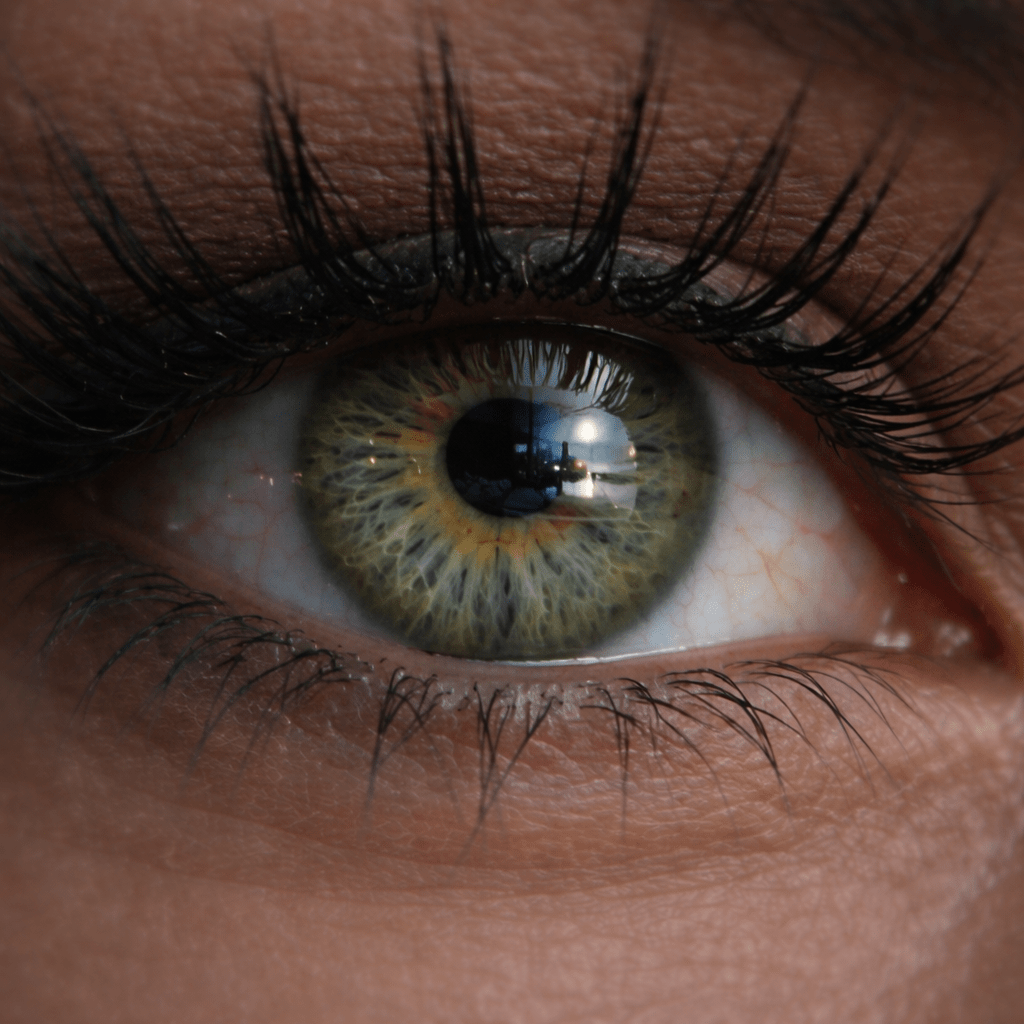
Seventeen years ago this week, I came down with something called orbital cellulitis, which sounds vaguely like a spa treatment but is, in fact, a life-threatening infection behind the eye.
You can look it up if you want, but I would not recommend doing so over lunch.
It started over a weekend, and at first I assumed I had picked up some sort of plague from one of my stepkids, who at the time were generous little distributors of every germ known to man. The on-call ophthalmologist confirmed it was not pink eye, which was comforting for almost six seconds, but she could not say exactly what it was. Her medical guidance, as I recall, was to keep an eye on it and call back if it got worse.
It got worse.
At around 4:00 Monday morning, I woke up with pain so severe in my left eye that I considered whether death might be an acceptable coping strategy. My eye was swollen shut, and when I tried to move it in the socket, I nearly passed out. I called the doctor. She did not answer.
Now, a more sensible person might have gone directly to the emergency room.
I, however, drove to the office first and did payroll.
There are many things I regret in life, and processing employee wages while half-blind and probably septic is now on the list.
After that little administrative flourish, I drove myself to the emergency room in Richland, Washington. Let me say this plainly: driving with one eye is not for the faint of heart. It is a deeply flawed experience, and I do not recommend it unless you have no options and poor judgment.
I had barely gotten through the door when the triage nurse took one look at me, bypassed all the usual pleasantries, and launched me into the medical fast lane. I was in a wheelchair before I could fully explain my name, and they were starting an IV and drawing blood while steering me toward a CT scan like they were late for a parade.
When I came back from imaging, the ER doctor was standing there waiting for me with the kind of expression doctors reserve for situations they wish had shown up sooner.
He said I had orbital cellulitis, and if they were going to save my eye, and possibly my life, I needed to be transported immediately to Harborview Medical Center in Seattle.
By MedJet.
I lived about 430 miles away.
So naturally, I called my ex-husband, who at that moment was still blissfully asleep and completely unaware that I was in the middle of a full-blown medical crisis. There is nothing quite like waking someone up with the words, “I’m being airlifted to Seattle,” to start a week off right.
From there, I was whisked to a private airport, which sounds glamorous until you realize a MedJet is not the kind of private aviation experience featured in luxury travel magazines.
A MedJet is basically a flying emergency room with wings and no interest whatsoever in your comfort.
It is stripped down, practical, and packed with whatever equipment paramedics might need to keep you alive while bouncing through the sky at alarmingly low altitude so your infected eyeball does not build up pressure and stage a dramatic exit.
Now, I already do not love flying under ideal conditions. Add a tiny jet, low elevation, mountain passes, and turbulence that felt less like weather and more like divine punishment, and I was hanging on by the last frayed thread of my sanity.
We were weaving between the Cascades like a dragonfly with poor impulse control.
At some point, the flight crew took pity on me and sedated me, which was both kind and medically wise. If you have ever experienced bad turbulence on a commercial flight, multiply that by ten and remove the beverage cart.
Harborview, by the way, is no joke. It is the only Level 1 trauma and burn center in Washington State, and it is often mentioned as one of the inspirations for Grey’s Anatomy. Whether that is true in the dramatic sense, I cannot say, but I can tell you those people knew exactly what they were doing, and I credit them with saving both my eye and my life.
Once I got settled into my room, I foolishly assumed the worst was behind me.
This was adorable.
I was placed in intermediate care, which meant I had a roommate. Her name was not really Ginny, but that is what I called her, and Ginny was about 70 years old and had recently had back surgery. Ginny loved to talk. Her husband, who was rail-thin and looked like a man who had spent a long career making questionable decisions, did not.
The rooms had locking closets, but only the nurses had keys, so if you wanted anything from your belongings, a nurse had to get it for you. This seemed like a solid system until it met Ginny and her husband.
Within about thirty minutes of meeting me, Ginny shared that she supplemented their Social Security income by selling Percocet for twenty dollars a pill.
And growing marijuana.
She then kindly asked if I would like to buy some.
I declined.
Not out of moral superiority, mind you. I simply felt that if I was going to buy black-market pain medication, I preferred not to do it from the woman in the next hospital bed while being treated for a potentially fatal eye infection.
My hope, frankly, was that Ginny would medicate herself into a quiet night.
And for a while, she did.
Sometime during that first night, however, her sketchy husband managed to convince the night nurse to open Ginny’s closet. At some point after that, he got into her purse, found her Percocet stash, and overdosed right there in our room.
At around 3:00 in the morning, the lab tech came in to draw my blood and found him slumped over in a chair, barely breathing.
She called a Code Blue, and suddenly our room turned into a full-scale emergency production.
Crash cart. Paddles. A crowd of people. Organized yelling. Shoes squeaking across the floor. It was as if my hospital room had been chosen to host the season finale of some deeply deranged medical drama.
They got him breathing again, pumped his stomach, and after a trip downstairs to the ER, admitted him to a room three doors down.
Ginny was not rattled by any of this.
She was furious that they had not sent him home.
Because, according to Ginny, while he was busy overdosing in my room, their house had been broken into and somebody had stolen both the marijuana plants and the Percocet stash.
This woman had bigger concerns than her husband’s brush with death.
Now while all this was happening, there was also a prisoner in the room between ours and Sketchy Husband’s. I do not know what crime he had committed, but I can say with confidence that he was not having his best week either.
At some point, he slipped past the officer assigned to guard him and wandered into our room, where he asked each of us, quite seriously, whether “the dragons nibbled our toes as well.”
By then, I had stopped trying to understand anything.
Once you have been airlifted across a mountain range to save your eyeball, watched your roommate’s husband overdose on stolen Percocet, and been interviewed by an escaped prisoner about dragon activity in your extremities, your standards for normal shift dramatically.
In the end, my eye was saved. I survived my unexpected adventure on the other side of the mountains. And two weeks later, just when I thought the experience had finally ended, I received a bill from the MedJet company for $26,872.
That was for a 50-minute flight.
Apparently terror is expensive.


Leave a comment