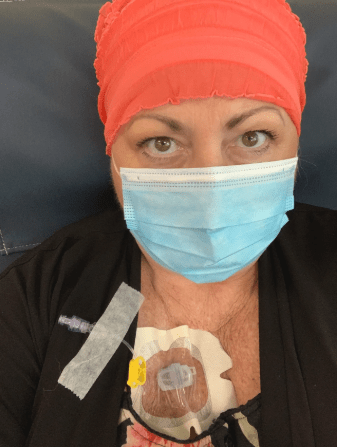
People like to ring bells when chemo ends.
That is a lovely tradition. I support it fully. But if we are being honest, there ought to be a second bell somewhere for the beginning. Not a cheerful bell. Something heavier. Something with warning in it. A church bell, maybe. Or an air-raid siren. Something that says, very clearly, your life as you knew it has just left the building.
I was diagnosed with Stage 2 cholangiocarcinoma, which is bile duct cancer for people who have better things to do than memorize obscure internal plumbing. The tumor had invaded my pancreas, but had not metastasized. So naturally, I responded by going big.
I had an eleven-hour robotic Whipple.
If you are going to have cancer surgery, apparently I recommend doing it with enough complexity and duration to impress a team of strangers and alarm everyone else. The Whipple, for the uninitiated, is a pancreaticoduodenectomy, which is a word so absurdly long it feels like the procedure should come with bonus airline miles. In simple terms, they remove and reroute enough of your insides that afterward you find yourself speaking about anatomy like a person who has recently been renovated.
I also had perineural involvement, which is another one of those cold, clinical phrases doctors say in calm voices while your mind is trying to crawl out a window. It means the cancer had involved the nerves, and it significantly increases the chance of recurrence. So even after the surgery, there was no neat little movie ending where everybody smiles, hugs, and goes out for pancakes.
There was chemo.
People who have never had chemo sometimes talk about it like it is a treatment. Technically, yes. It is also a controlled poisoning with paperwork and debt.
I understand why it exists. I am grateful it exists. It helped save my life. Those things are true. It is also true that chemo can feel worse than the disease itself. Cancer is the arsonist. Chemo is the fire department showing up with axes and no regard for the furniture.
Because that is what nobody really knows until they know. Chemo does not just kill the bad cells. It kills the good ones too. It does not arrive with nuance. It does not stop to ask who was helping. It just starts swinging. And the result, for many of us, is that you can feel like you are dying in order to keep from dying.
In essence, you are.
That is not melodrama. That is chemistry.
I went through ten months of Gemzar and Cisplatin, followed by two months of radiation with 5-FU chemo, which I found both juvenile and deeply appropriate. If ever a drug name captured the general spirit of the situation, that one did. There was not a day in that stretch when I did not know I was in it. My body knew. My mouth knew. My bones knew. My appetite packed up and left town. Even water seemed to arrive with an attitude.
And because my immune system was so compromised, I spent a total of eight accumulated weeks in the hospital over those ten months.
Eight weeks.
Not all at once. Just enough at a time to keep reminding me that cancer treatment was not something happening around my life. For a while, it was my life.
For the entire time I was in chemo, I had this awful saline aftertaste in my mouth. If you have ever had an IV flushed and caught that mineral-slick, vaguely medical taste in the back of your throat, imagine that moving in and paying rent. It was like sucking on a hospital. Yuck does not begin to cover it.
Then there was the nausea.
Not the kind that comes and goes. Not the kind where a cracker and a prayer might settle things down. I mean a low, constant, background nausea that hummed twenty-four hours a day like an appliance you cannot unplug. It is very hard to explain what that kind of relentless sickness does to a person. It wears on your patience first. Then your sleep. Then your sense of self. After a while, you are no longer a woman having nausea. You are just nausea with debt.
For me, two things helped. Peppermint Altoids were non-negotiable. I never wanted to be without them. And medical marijuana gummies (prescribed) helped too. I am not interested in debating anybody’s opinions about that. I am simply reporting from the battlefield. They helped tremendously.
And then there was Neupogen.
If chemo was the Devil, Neupogen was his mean little cousin.
Because once chemo has done its number on your blood counts, sometimes they give you Neupogen to boost your immune system back up. That sounds helpful and medicinal and almost reassuring, right up until it hits and you realize it has apparently chosen to stimulate your bone marrow with a tire iron.
The body pain was unreal. Not ordinary pain. Not soreness. Not “I slept funny” pain. I mean deep, punishing, full-body pain that made it seem entirely possible that even my hair hurt. I had nausea, vomiting, bone pain, fever, fatigue, hair loss, diarrhea, headaches, weight loss, shortness of breath, mouth sores, rash. All of it. I felt like a cautionary pamphlet come to life.
I do not say that to frighten anyone. I say it because it was true.
All of this was happening during the beginning and height of COVID, because apparently the universe felt I was not being challenged enough.
Now, there is lonely, and then there is being immunocompromised during a global pandemic while going through cancer treatment. Those are not the same thing. I experienced much of my treatment largely alone, which is a sentence that sounds very stoic until you are the one living it. Alone is louder than people think. It has a sound. It sounds like your own thoughts getting too much traction.
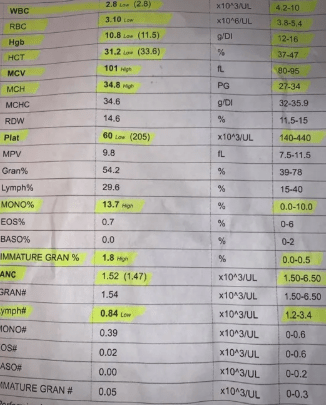
My sister came down from North Carolina to spend Christmas with me in 2019. That was the plan, anyway. She landed, and almost immediately rushed me to the hospital. I spent Christmas and New Year’s in isolation with pancytopenia and sepsis.
Pancytopenia, for anyone fortunate enough not to know, is when your blood counts tank across the board. I think of it as when your immune system files for divorce and leaves you with the bills.
While I was locked away in the hospital, my sister coped the way some women do. She reorganized my kitchen.
So I came home from a life-threatening medical crisis to discover that my spatulas had entered witness protection.
There are many forms of love. Some bring casseroles. Some sit quietly and hold your hand. Some alphabetize your pantry while you are fighting for your life. I did not especially enjoy that particular surprise, but I understood the impulse. Helplessness makes people strange. Love you, Sis.
That is something worth saying plainly. Chemo does not happen to one person. It happens to everyone around them too. They are scared. They are helpless. They want to fix something unfixable. So they ask, “What can I do?”
And here is my answer, now that I have lived it.
Do not ask too much. Just do.
Take out the trash. Wash the dishes. Walk the dog. Pick up the prescription. Drop off the groceries. Send the text. Sit there without making the patient manage your feelings on top of their own. Do not make them make you a list unless they want to. A person in chemo is already working full time to survive their own body.
I had a dear friend who understood this instinctively. Every time I was hospitalized, she took care of my dog, Coco. And when she brought Coco home, if she saw dishes in the sink or trash that needed taking out, she just did it. Quietly. Without fanfare. Without asking if I wanted help in some soft voice that required me to spend energy answering.
That kind of help is worth gold. Theresa, you are a saint.
There was one day in the ICU, right at the beginning of the toilet paper shortage, when I was watching the news and I burst into tears. A nurse rushed in, understandably concerned that I was in pain or in distress. Through tears, I told her I only had two rolls of toilet paper at home and I was going to survive cancer just to die from COVID while trying to find Charmin.
This, I believe, was a reasonable concern at the time.
When they discharged me, they sent me home with twelve rolls.
That is the kind of mercy I respect. Practical. Unsentimental. Deeply appreciated.
Another kindness came every morning in the form of a Good Morning Snapchat from the man who is now my fiancé, though he was not then. At the time, he was my dear lifelong friend, sending one small bright thing into a day that otherwise might be measured by nausea, fear, and whatever fresh indignity my body had planned.
That mattered more than he probably knew.
That is another truth chemo teaches you. Grand gestures are lovely, but tiny faithful kindnesses save people. A text. A dog walked. A sink emptied. Twelve rolls of toilet paper. Hope does not always arrive wearing a halo. Sometimes it comes with peppermint Altoids and a trash bag.
I also learned that chemo patients lie.
Not maliciously. Not dramatically. We lie when people ask if we are okay, because the real answer is too long and too ugly for the cereal aisle or the church lobby or the ten minutes before somebody has to go pick up their kids. We lie because sometimes saying, “I feel like my cells are being evicted one by one and I no longer trust my own mouth,” seems like too much honesty for casual conversation.
So we say, “I’m okay.”
Or, “I’m hanging in there.”
Or the classic Southern fraud, “I’ve been better.”
Sometimes we are trying to protect you. Sometimes we are trying to protect ourselves. Sometimes naming the full horror out loud would make it too real. And sometimes we simply do not have the energy to explain what it is like to be saved by the very thing that is flattening you.
That is what chemo was for me. The Devil and Savior at the same time.
A horror I chose to endure because the alternative was worse.
And I need to be careful here, because everyone’s journey is different. Some people tolerate treatment better than others. Some have complications. Some have support systems that wrap around them beautifully. Some are far too alone. Some are younger. Some are older. Some are frightened and furious. Some become strangely calm. There is no one correct way to survive cancer treatment. There is only your way, and even that may change by the hour.
So if you are in it now, I will not insult you with slogans.
I will tell you this instead.
What you are feeling is real.
If you feel weak, sick, angry, terrified, ugly, numb, impatient, grateful, mean, hungry, not hungry, hopeful, hopeless, or all of those before noon, none of that means you are doing it wrong.
It means chemo has moved into your life and started redecorating with a flamethrower.
It also will not feel this way forever.
That matters. Not because it makes the present moment easier, but because when you are deep in treatment, time changes. A bad hour becomes a whole identity. A bad week feels permanent. You start to wonder if this flattened, sick, chemically haunted version of yourself is the only self left.
It is not.
For me, it got appreciably better after treatment ended. Not overnight. Not like in the movies. Recovery has its own nonsense. But better, yes. Real better.
And here is where survivorship gets its own hard chapter.
I have been NED, negative evidence of disease, for more than five years now. On paper, that sounds like the part where everybody exhales. It sounds like the finish line. It sounds like safety.
It is not always safety.
It is surveillance.
It is learning that surviving cancer does not necessarily mean being done with it. It means scans. Bloodwork. Follow-ups. It means knowing exactly how long three months feels when something ugly has already happened to you once before.
My latest scans showed two areas of concern.
Not answers. Not certainty. Concern.
So now I am back to three-month scans and bloodwork for the foreseeable future, which is its own special kind of emotional whiplash. You work so hard to claw your way back into ordinary life, and then one scan can walk back into the room and sit down like it owns the place.
That is part of survival too.
Nobody tells you enough about that part. About how a person can be deeply grateful, fully alive, mostly healed, and still afraid. About how you can build a beautiful life and still feel your stomach drop when the phone rings or the portal updates or somebody says the words “we just want to keep an eye on this.”
Cancer has a long afterlife.
That does not mean it gets to own all the years that follow. But it does mean the years that follow are not always clean and uncomplicated and inspirational in the way people seem to prefer.
Sometimes survival is messy.
Sometimes survival is joyful and scared at the same time.
Sometimes survival is being five years out and still having to gather yourself before every scan like you are walking back into an old neighborhood you never wanted to see again.
That is real. And if that is where you are, you are not failing survivorship. You are living it.
There are tools worth reaching for.
If your appetite tanks, and for many of us it does, ask for help. Do not wait until food has become a moral argument. Megace helped me. Ask questions. Bring every medical summary home and make somebody explain it to you in plain English. In this age, use every resource available. Ask ChatGPT to simplify the jargon and help you think of follow-up questions for your team. You are not stupid because medicine sounds like a foreign language. Medicine often sounds like a foreign language because medicine likes itself a little too much.
And if you survive, which I pray you do, be aware that survival itself can be complicated.
Survivor’s guilt is real. Therapy helped save my life almost as surely as the treatment did. Living through something awful does not automatically hand you wisdom and peace. Sometimes it hands you dread, grief, fear of recurrence, and a weird inability to enjoy ordinary Tuesday afternoons because part of you is still waiting for the phone to ring.
Get help with that.
There is no medal for dragging your trauma around behind you like a yard ornament.
I still carry the knowledge that my cancer had perineural involvement. I still know recurrence is possible. I still know how quickly life can narrow to a lab value, a scan, a smell, a taste in the back of the mouth. None of that has disappeared.
But neither have I.
That matters too.
I am still here. I still remember the saline taste and the Altoids and the Neupogen bone pain and the eight accumulated weeks in the hospital and the toilet paper panic and the kitchen ambush and the dog care and the daily Snapchats and the way chemo could make an ordinary morning feel like an act of endurance. I remember all of it. I probably always will.
And I am still here.
So if you are the patient, hold on. Borrow hope if you have to. Steal it from the people who love you until you can make your own again. Ask for what helps. Refuse shame. Take the gummy. Suck on the Altoid. Ask the dumb question. There are no dumb questions in oncology, only unanswered ones.
And if you are the caregiver, be kind. Be practical. Be steady. Understand that chemo can turn a person into a ghost of themselves for a while. Do not take that personally. Show up anyway. Quietly, consistently, without needing applause.
Cancer is ugly. Chemo is uglier.
It is also, sometimes, the thing that gets you through.
That is the terrible bargain.
That is the truth.
And if you are in the middle of it right now, staring down another infusion, another scan, another night where your own body feels like hostile territory, hear this from someone who has been there.
This is brutal.
And this will pass.


Leave a comment